No single hyaluronic acid filler is approved for every part of the face. In Korea, each Juvéderm product carries its own approved purpose, and that wording names the layer it goes into and, in several cases, the area: lips, chin, cheek fine lines, or facial volume. Teoxane’s products are also on the Korean register, under fewer records than the brand’s global catalog suggests and, in part, under model codes rather than product names. This article lays out what the Korean approval says for each product, how that maps onto facial areas, and what to ask before a filler is chosen for you.
Why is one filler not used for every part of the face?
Because each product’s approval is written for a layer and often for an area, and because the gels themselves are made to behave differently. A product approved for the mid-dermis carries a different approval from one approved for injection onto the bone of the chin, even when both are hyaluronic acid from the same manufacturer.
- The Korean approval names the injection layer: intradermal, mid-dermis, deep dermis, subcutaneous, or supraperiosteal (on the bone surface).
- Several approvals also name a site: the lips, the chin, the cheeks, or facial volume in general.
- According to manufacturers’ own descriptions, each gel is made with a different firmness and degree of cross-linking, which is why one is meant for fine lines and another for deep folds or volume.
- The face itself varies. The lips and the skin around the mouth move constantly, the cheeks carry volume, and the chin sits on bone.
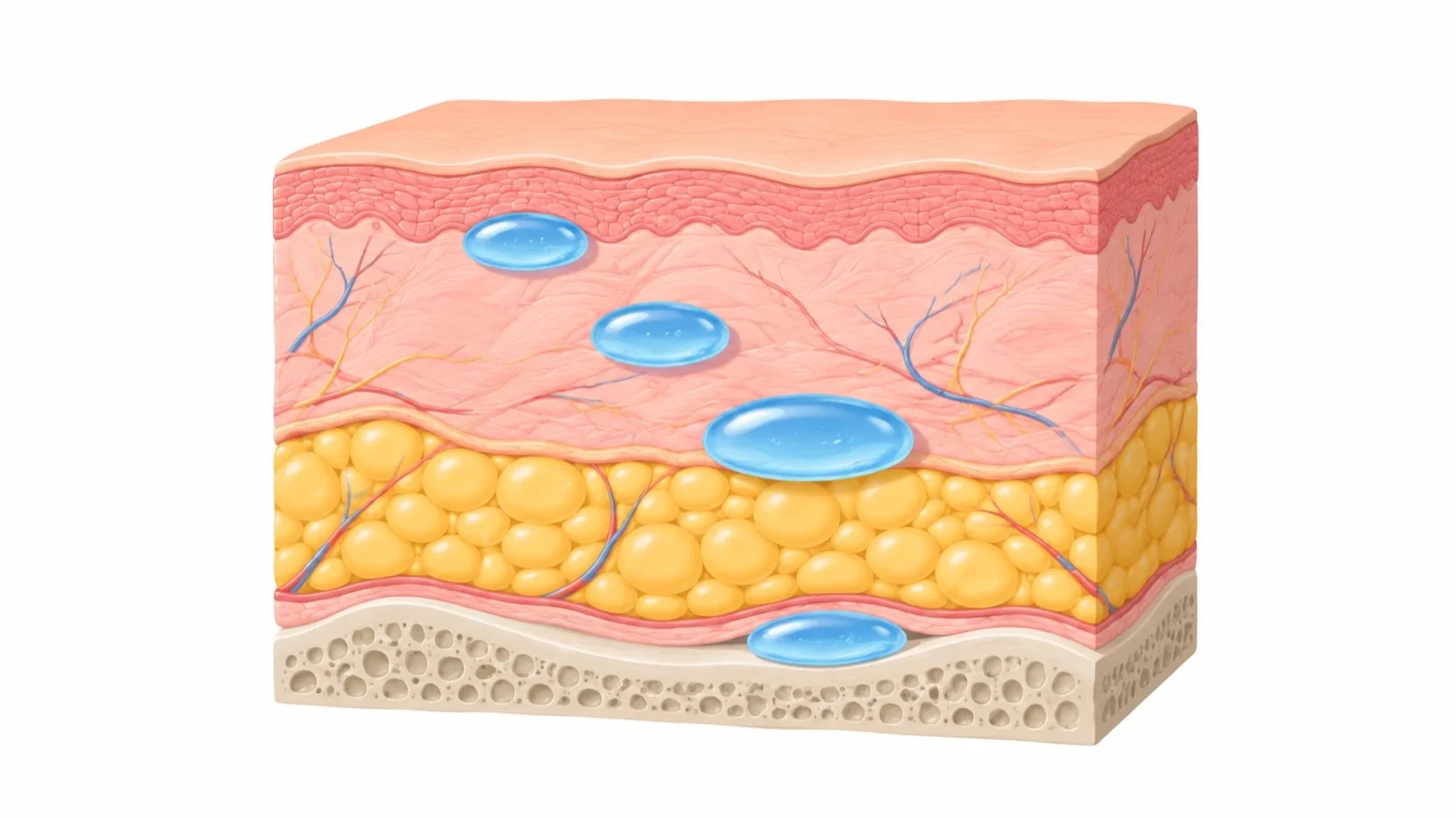
In practice, choosing a filler means choosing a product for a layer in an area. The rest of this article follows that order.
Which Juvéderm products are approved in Korea, and for what?
Seven Juvéderm products currently hold Korean approval, all imported by AbbVie Korea and all containing lidocaine, according to the Korean Ministry of Food and Drug Safety (MFDS) device register retrieved on 26 September 2026. The table lists the approved purpose for each in translation, together with the approval number you can look up yourself. “Physical restoration” is the register’s own wording.
| Product | Approved purpose in Korea (translated) | Approval no. |
|---|
| Juvéderm Ultra XC | Injected into the mid-dermis to temporarily correct facial skin wrinkles, or into the mucosa to temporarily augment the lips | 수허 09-1040 |
| Juvéderm Ultra Plus XC | Injected intradermally to temporarily improve facial wrinkles in adults | 수허 09-1039 |
| Juvéderm Volbella | Injected into the superficial or mid-dermis to temporarily correct and improve facial skin wrinkles, or into the mucosa to temporarily augment the lips | 수허 13-450 |
| Juvéderm Volift | Injected into the deep dermis to temporarily correct and improve facial skin wrinkles, or into the mucosa to temporarily augment the lips | 수허 13-3071 |
| Juvéderm Voluma | Injected to temporarily restore facial volume in adults | 수허 11-1452 |
| Juvéderm Volux | Injected subcutaneously and supraperiosteally to temporarily improve chin volume in adults through physical restoration | 수허 20-90 |
| Skinvive by Juvéderm | Injected intradermally to temporarily improve moderate to severe fine lines of the cheek in adults through physical restoration | 수허 18-134 |
- Older records for Juvéderm Ultra, Ultra Plus, Refine, and an earlier Voluma were withdrawn from the register between 2015 and 2018; the register does not state why. The products above are the current ones.
- “Temporarily” appears in every approval. The wording describes a change that wears off, not a lasting one.
- The register files these under the importer and the product name, so a search for “Juvederm” (spelled without the accent) in the model-name field finds them directly.
How does the approval wording map onto facial areas?
Reading the seven approvals together, the products can be grouped by the layer and the site each is approved for. This is the approval text, not a treatment plan; which product is used on you is decided at the consultation.
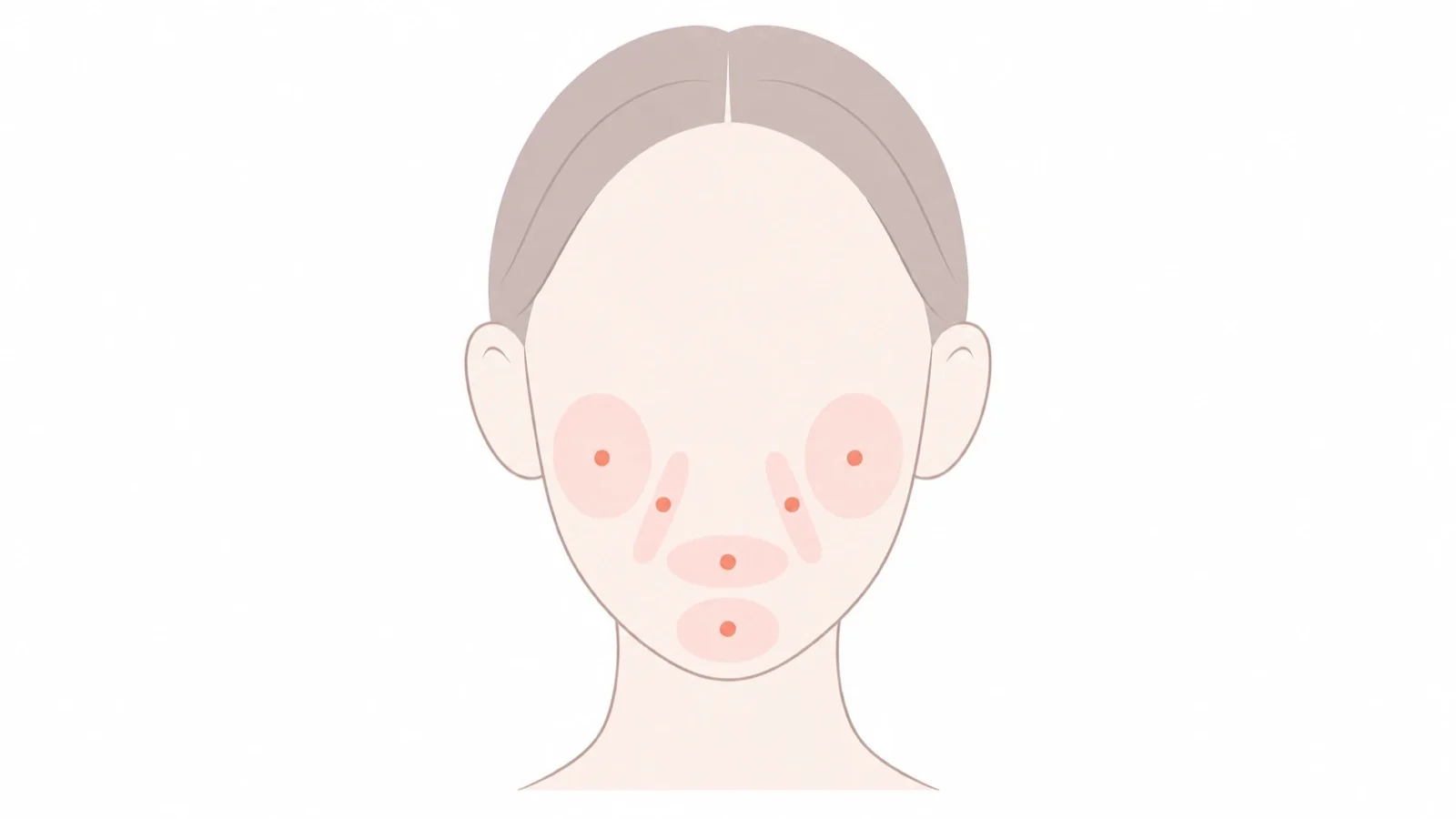 Lips. Three products are approved for injection into the mucosa to augment the lips: Ultra XC, Volbella, and Volift.
- Fine, superficial lines. Volbella is approved for the superficial or mid-dermis. Skinvive is approved specifically for fine lines of the cheek, injected intradermally; an earlier article on Skinvive covers it in more detail.
- Deeper wrinkles and folds. Volift is approved for the deep dermis. Ultra Plus XC is approved for intradermal injection and Ultra XC for the mid-dermis, both for wrinkle correction.
- Facial volume. Voluma is the one approved for restoring facial volume rather than for a wrinkle. Volume can also be approached with materials other than hyaluronic acid; this article on biostimulators and HA fillers describes the difference.
- Chin. Volux is approved for chin volume, placed beneath the skin and on the bone surface.
Where the approval names a layer but not a site, the site is a clinical choice. A deep-dermis product, for example, can be used on more than one kind of fold; the approval limits the layer, and the doctor selects the site after examining you.
Where does Teoxane fit in Korea?
Two groups of Teoxane products have live Korean records. The first is Teosyal PureSense Global Action, filed under that name and approved for subcutaneous injection to temporarily improve facial wrinkles in adults through physical restoration (approval numbers 수허 14-2569 and 수허 26-41, held by two importers). The second group is filed under model codes rather than names, and its wording matches the RHA products.
- Records 수허 19-48 and 수허 19-49, imported by Jetema and manufactured by Teoxane S.A., are approved to temporarily improve moderate to severe nasolabial folds in adults aged 22 or older, using lidocaine-containing cross-linked hyaluronic acid.
- The two records differ only in depth: mid-to-deep dermis for 수허 19-48, and deep dermis to superficial subcutaneous tissue for 수허 19-49. Those are the depths Teoxane gives for RHA 2 and RHA 3, and for RHA 4.
- Because the records list model codes, a search for “RHA” or “Teosyal RHA” on the register does not find them. Search by approval number instead.
- The manufacturer’s global information lists more products, including RHA 1, RHA Kiss, Redensity, and Ultra Deep. We did not find current Korean records for those; a group of ten Teosyal records, including Ultra Deep, was withdrawn in January 2021.
In Korea, then, the approved purpose for the RHA records is one area, the nasolabial folds. If a Teoxane product is proposed for you, ask the clinic for the product name and the approval number on the box, and look it up.
What does the examination look at, and what should a visitor from abroad plan for?
The doctor is matching a product’s approved layer to what your face actually needs there, and that is decided by examination. A consultation for filler is likely to cover the points below.
- Whether the concern is a line in the skin or a loss of volume beneath it. Those call for different layers and therefore different products.
- How much the area moves, which affects how a gel sits over time.
- Skin thickness at the site, which affects whether a superficially placed product is visible or can be felt.
- Previous filler, and when it was placed, matters for both safety and planning. Where a filler is placed can matter as much as which one; see what a retaining ligament filler means.
- What you want changed, in your own words, so the doctor can say whether a filler addresses it and which layer is involved.
If you are visiting from abroad, plan for the consultation to take longer than the injection. The decisions above happen there, and several things are easier to sort out before you travel.
- Every Juvéderm product listed above, and Teosyal PureSense Global Action, contains lidocaine. If you have reacted to a local anesthetic before, say so in advance.
- Ask for the product name and the Korean approval number in writing, and keep the sticker from the box if the clinic offers it. It tells a doctor at home exactly what was used.
- Hyaluronic acid fillers can be dissolved with an enzyme (hyaluronidase) if needed. Ask the clinic how that is handled before you decide.
- Swelling settles over a period the clinic will explain, and some clinics want to see you again afterward. Ask when, and whether a photograph can replace the visit if you have left Korea.
- Bring a list of medications, especially anything that affects bleeding, and tell the clinic about prior procedures in the same area.
What are the side effects, and what should you watch for?
Swelling, bruising, and tenderness at the injection site are commonly reported after any hyaluronic acid filler. The manufacturer’s patient information for Teosyal products also lists rare but serious events from injection into a blood vessel (vascular occlusion), including tissue damage and vision impairment. Each product’s own information sheet lists its risks; ask for the one that applies to the product used on you. The table below is what is commonly documented; the clinic’s written instructions take precedence.
| Commonly reported | What it usually looks like | What clinics commonly instruct |
|---|
| Swelling and bruising | At the injection site, early on | A cold compress may be advised; avoid pressure and heat on the area |
| Lumps or firmness | A small bump you can feel under the skin | Mention it at the follow-up; do not press or massage unless the clinic says to |
| Asymmetry | One side looks fuller than the other | Wait for swelling to settle, then raise it at the follow-up |
| Delayed swelling | Swelling that appears days or weeks later | Contact the clinic |
| Skin that turns pale, blotchy, or very painful soon after injection | Possible sign of vascular occlusion | Contact the clinic immediately; this is treated as urgent |
| Any change in vision after injection | Very rare, described in manufacturer information | Seek emergency care at once |
Tell the clinic about any medication you take and any prior treatment in the same area. Whether this treatment suits you is a clinical judgment your doctor makes after examining you.
FAQ
Is Juvéderm one product or several?
Several. In Korea, seven Juvéderm products currently hold separate approvals, each with its own approved layer and, for some, site. “Juvéderm” on its own does not tell you which one is meant.
Which Juvéderm products are approved for the lips in Korea?
Three: Ultra XC, Volbella, and Volift. Each approval names injection into the mucosa for temporary lip augmentation.
Is Teoxane’s RHA line approved in Korea?
Two Korean records filed under model codes, 수허 19-48 and 수허 19-49, match RHA 2, RHA 3, and RHA 4, and they are approved for moderate to severe nasolabial folds only. We did not find Korean records for RHA 1, RHA Kiss, or Redensity. Ask for the approval number on the box of the specific product before treatment.
Can a hyaluronic acid filler be removed?
Yes, in principle. Hyaluronic acid can be dissolved with an enzyme called hyaluronidase. Whether that is appropriate in a given case, and how it is done, is a clinical decision, so ask about it before treatment rather than after.
How do I check a filler’s Korean approval myself?
Ask the clinic for the product name and approval number, then search the MFDS medical device register at emedi.mfds.go.kr. For Juvéderm, a search on the product name in the model-name field returns the current records.
How long does a Juvéderm filler last?
It varies with the product, the area, the amount and your own skin. Every Korean approval listed here describes the improvement as temporary. Ask the doctor what to expect for the product and area used on you, and when a follow-up visit makes sense.
This article is general information about a treatment offered at 4ever the Cheongdam. It is not medical advice and does not replace consultation with a doctor who has examined you. Product approvals, regulations, and clinic practices change; please confirm anything that affects a decision with the clinic directly.
Sources: Korean Ministry of Food and Drug Safety, medical device approval register, emedi.mfds.go.kr (records retrieved 26 and 30 September 2026). Teoxane, product information for patients (manufacturer’s global information; not a Korean approval document).
4ever the Cheongdam
99-23 Cheongdam-dong, Gangnam-gu, Seoul, Korea
서울 강남구 청담동 99-23 (copy this line into Naver Map, Kakao Map, or show it to a taxi driver)
Tel. +82-2-518-7705

No single hyaluronic acid filler is approved for every part of the face. In Korea, each Juvéderm product carries its own approved purpose, and that wording names the layer it goes into and, in several cases, the area: lips, chin, cheek fine lines, or facial volume. Teoxane’s products are also on the Korean register, under fewer records than the brand’s global catalog suggests and, in part, under model codes rather than product names. This article lays out what the Korean approval says for each product, how that maps onto facial areas, and what to ask before a filler is chosen for you.
Why is one filler not used for every part of the face?
Because each product’s approval is written for a layer and often for an area, and because the gels themselves are made to behave differently. A product approved for the mid-dermis carries a different approval from one approved for injection onto the bone of the chin, even when both are hyaluronic acid from the same manufacturer.
In practice, choosing a filler means choosing a product for a layer in an area. The rest of this article follows that order.
Which Juvéderm products are approved in Korea, and for what?
Seven Juvéderm products currently hold Korean approval, all imported by AbbVie Korea and all containing lidocaine, according to the Korean Ministry of Food and Drug Safety (MFDS) device register retrieved on 26 September 2026. The table lists the approved purpose for each in translation, together with the approval number you can look up yourself. “Physical restoration” is the register’s own wording.
How does the approval wording map onto facial areas?
Reading the seven approvals together, the products can be grouped by the layer and the site each is approved for. This is the approval text, not a treatment plan; which product is used on you is decided at the consultation.
Where the approval names a layer but not a site, the site is a clinical choice. A deep-dermis product, for example, can be used on more than one kind of fold; the approval limits the layer, and the doctor selects the site after examining you.
Where does Teoxane fit in Korea?
Two groups of Teoxane products have live Korean records. The first is Teosyal PureSense Global Action, filed under that name and approved for subcutaneous injection to temporarily improve facial wrinkles in adults through physical restoration (approval numbers 수허 14-2569 and 수허 26-41, held by two importers). The second group is filed under model codes rather than names, and its wording matches the RHA products.
In Korea, then, the approved purpose for the RHA records is one area, the nasolabial folds. If a Teoxane product is proposed for you, ask the clinic for the product name and the approval number on the box, and look it up.
What does the examination look at, and what should a visitor from abroad plan for?
The doctor is matching a product’s approved layer to what your face actually needs there, and that is decided by examination. A consultation for filler is likely to cover the points below.
If you are visiting from abroad, plan for the consultation to take longer than the injection. The decisions above happen there, and several things are easier to sort out before you travel.
What are the side effects, and what should you watch for?
Swelling, bruising, and tenderness at the injection site are commonly reported after any hyaluronic acid filler. The manufacturer’s patient information for Teosyal products also lists rare but serious events from injection into a blood vessel (vascular occlusion), including tissue damage and vision impairment. Each product’s own information sheet lists its risks; ask for the one that applies to the product used on you. The table below is what is commonly documented; the clinic’s written instructions take precedence.
Tell the clinic about any medication you take and any prior treatment in the same area. Whether this treatment suits you is a clinical judgment your doctor makes after examining you.
FAQ
Is Juvéderm one product or several?
Several. In Korea, seven Juvéderm products currently hold separate approvals, each with its own approved layer and, for some, site. “Juvéderm” on its own does not tell you which one is meant.
Which Juvéderm products are approved for the lips in Korea?
Three: Ultra XC, Volbella, and Volift. Each approval names injection into the mucosa for temporary lip augmentation.
Is Teoxane’s RHA line approved in Korea?
Two Korean records filed under model codes, 수허 19-48 and 수허 19-49, match RHA 2, RHA 3, and RHA 4, and they are approved for moderate to severe nasolabial folds only. We did not find Korean records for RHA 1, RHA Kiss, or Redensity. Ask for the approval number on the box of the specific product before treatment.
Can a hyaluronic acid filler be removed?
Yes, in principle. Hyaluronic acid can be dissolved with an enzyme called hyaluronidase. Whether that is appropriate in a given case, and how it is done, is a clinical decision, so ask about it before treatment rather than after.
How do I check a filler’s Korean approval myself?
Ask the clinic for the product name and approval number, then search the MFDS medical device register at emedi.mfds.go.kr. For Juvéderm, a search on the product name in the model-name field returns the current records.
How long does a Juvéderm filler last?
It varies with the product, the area, the amount and your own skin. Every Korean approval listed here describes the improvement as temporary. Ask the doctor what to expect for the product and area used on you, and when a follow-up visit makes sense.
This article is general information about a treatment offered at 4ever the Cheongdam. It is not medical advice and does not replace consultation with a doctor who has examined you. Product approvals, regulations, and clinic practices change; please confirm anything that affects a decision with the clinic directly.
Sources: Korean Ministry of Food and Drug Safety, medical device approval register, emedi.mfds.go.kr (records retrieved 26 and 30 September 2026). Teoxane, product information for patients (manufacturer’s global information; not a Korean approval document).
4ever the Cheongdam
99-23 Cheongdam-dong, Gangnam-gu, Seoul, Korea
서울 강남구 청담동 99-23 (copy this line into Naver Map, Kakao Map, or show it to a taxi driver)
Tel. +82-2-518-7705