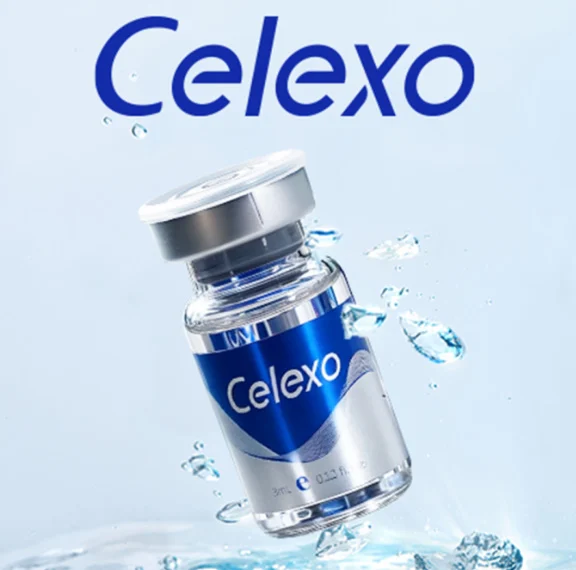
There are a lot of exosome skin boosters on the market, and most of them say much the same thing. Regeneration. Anti-ageing. Reactivating the skin’s own energy.
What is harder to find is a clear account of how they actually differ. “Exosome” is one word covering products with very different origins. An exosome drawn from human stem cells and one drawn from a plant start from different places, so the skin concerns they suit differ too.
Celexo takes a different starting point within that category: inflammation. Built on plant-derived exosomes from Centella Asiatica, it is designed to settle the inflammatory environment first. That is why it draws interest from people with recurring redness, or skin that turns sensitive easily after treatment. This article covers the basics of exosome skin boosters, what is in Celexo and how it works, how it compares with ASCE+, and how it is combined with devices for different skin concerns.
| Section | Contents |
|---|
| 1 | What an exosome skin booster is |
| 2 | Celexo: the basics |
| 3 | Centella (CICA) and the anti-inflammatory mechanism |
| 4 | Celexo compared with ASCE+ |
| 5 | Who Celexo suits, and where it is used |
| 6 | Combination protocols by skin concern |
| 7 | What to check before an exosome skin booster |
| 8 | Frequently asked questions |
1. What an Exosome Skin Booster Is
Exosomes are nano-scale vesicles, 30–150 nm across, that cells release when signalling to one another. They carry miRNA, proteins and lipids, and take part in cell-to-cell communication and the regulation of the local environment.
An exosome skin booster applies these to the skin to prompt a response at cell level. Where established skin boosters such as Rejuran and Juvelook work by delivering a specific ingredient — PN, PLA and the like — exosomes work through the cell signalling system itself. It is a different approach. Exosomes divide into two broad groups by source material.
| Category | Human-derived exosomes | Plant-derived exosomes |
|---|
| Source | Human stem cell culture medium | Plants such as centella and ginseng |
| Representative product | ASCE+ (ExoCoBio) | Celexo (ABio Materials) |
| Character | Contains a range of growth factors and peptides | Centred on anti-inflammatory and soothing components |
| Structure | Vesicles derived from cell membrane | Bilayer phospholipid structure, similar to a cell membrane |
Both human- and plant-derived exosomes can be used to support skin condition, firmness and hydration. As a general orientation: human-derived exosomes focus on the regenerative environment and firmness, plant-derived exosomes on calming the skin and managing a fresh, even tone.
2. Celexo: The Basics
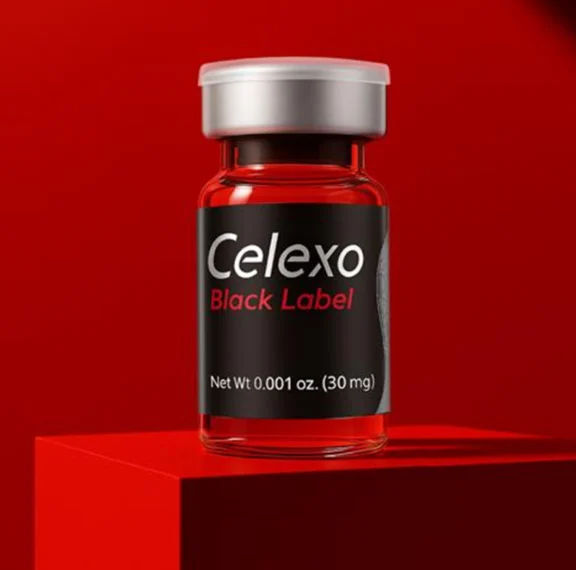
Celexo Exo-Cica is a plant-derived exosome skin booster developed by ABio Materials, using exosomes from Centella Asiatica.
| Item | Details |
|---|
| Manufacturer | ABio Materials |
| Core material | Exo-Cica® Block (Centella-derived plant exosomes, patented separation and purification technology) |
| Main composition | Exo-Cica Block + Dual HA (high and low molecular weight, dual structure) + Collagen I & III |
| Exosome structure | Bilayer phospholipid structure, similar to the human cell membrane |
| Raw material | Smart-farm cultivation of a selected centella variety, for consistent quality control |
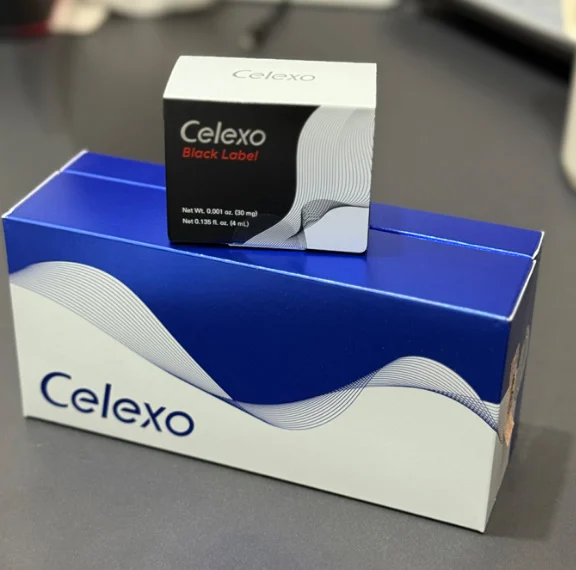
| Format | Vials (10 vials per box) |
| Compatible devices | Auto MTS, needle RF (including the Potenza Pumping Tip) |
| Recommended schedule | Every 2–3 weeks, three sessions or more |
At the centre of Celexo is its own material, Exo-Cica® Block. Exosomes are extracted from centella using a patented high-purity separation and purification process, with a bespoke centella variety grown on a smart farm as the raw material. Plant-derived exosomes are generally understood to have lower immunogenicity than human- or animal-derived exosomes, and to be more straightforward to produce at scale.
3. Centella (CICA) and the Anti-Inflammatory Mechanism
The reason Celexo positions itself around inflammation comes down to what is in centella (CICA).
Centella contains the following principal components.
| Component | Role |
|---|
| Madecassoside | Supports calming and tissue regeneration |
| Asiaticoside | Used in managing skin condition |
| Asiatic acid | Supports improvement of the skin barrier environment |
| Madecassic acid | Involved in the skin’s protective function |
Celexo delivers these centella components in exosome form. When the miRNA inside the exosome reaches the cell, expression of the IL-6 and TNF-α genes involved in the inflammatory response is suppressed, and IL-6 and IL-8 synthesis decreases. That is the anti-inflammatory mechanism at work. Celexo’s regenerative process runs in three phases.
| Phase | What happens |
|---|
| Phase 1 — Inflammation control | Exo-miRNA signalling suppresses the inflammatory response |
| Phase 2 — Barrier recovery | Dual HA reduces transepidermal water loss and restores the skin barrier |
| Phase 3 — Collagen rebuilding | Collagen I & III reinforces the collagen environment in the dermis |
In a manufacturer-commissioned human trial (KBI, IRB-approved), two weeks after three sessions, wrinkle depth was reported to fall by about 19%, pore area by about 31%, and radiance to improve by 25% or more. Results vary from person to person.

4. Celexo Compared with ASCE+
Search for exosome skin boosters and ASCE+ and Celexo are the two most often compared. Both are exosome-based, but they differ in source material and in approach.
| Category | Celexo Exo-Cica | ASCE+ |
|---|
| Manufacturer | ABio Materials | ExoCoBio |
| Exosome source | Plant-derived (centella) | Human-derived (stem cell culture medium) |
| Core material | Exo-Cica® Block | ExoSCRT™ purified exosomes |
| Format | Vial (liquid) | Freeze-dried powder plus activating solution |
| Main composition | Exosomes + Dual HA + Collagen I & III | 5 billion exosome particles + 5 growth factors + 6 peptides + 19 amino acids |
| Strength | Anti-inflammatory, calming, barrier regeneration | Cell activation through a range of growth factors and peptides |
| Raw material control | Consistent quality control from smart-farm cultivation | Stem cell culture based |
| Best suited to | Recurring inflammation, redness, skin left sensitive after treatment | General skin regeneration, firmness, anti-ageing |
ASCE+ — Exosomes extracted from human stem cell culture medium, containing over five billion exosome particles alongside a range of growth factors, peptides and amino acids. Supplied as a freeze-dried powder, it is used broadly for general skin regeneration and anti-ageing.
Celexo — Plant-derived exosomes from centella, with an approach built specifically around calming and anti-inflammatory action. Where ASCE+ prompts broad regeneration through a range of growth factors, Celexo concentrates on a single axis. In skin where inflammation keeps returning, settling that environment tends to come before adding a range of active ingredients, and Celexo is designed for that order of operations.
5. Who Celexo Suits, and Where It Is Used
Not every skin booster suits every concern. Because Celexo is built around calming and anti-inflammatory action, these are the concerns we are most often asked about.
Concern Why Celexo is considered Recurring pustular acne An anti-inflammatory approach to a returning inflammatory environment Persistent sensitivity from redness or rosacea Stabilising the inflammatory environment comes before strong regeneration Skin needing recovery after laser or lifting treatment Calming the micro-damage and inflammatory response that follow treatment Skin in poor condition from frequent treatment Barrier recovery and stabilising overall condition Skin texture and radiance Improving the dermal environment through the three-phase regenerative cycle
Suitability varies with your skin, so a full consultation should come first.
6. Combination Protocols by Skin Concern
Celexo is sometimes used on its own, but its structure means absorption and effect improve when it is paired with a device. What matters is that the combination changes according to the concern.
| Concern | Device | What the combination does |
|---|
| Pores, texture, redness | Potenza (Pumping Tip) | RF energy and pressure deliver Celexo into the dermis, prompting barrier recovery and regeneration signals together |
| Firmness and collagen | MTS | Micro-channels allow deeper penetration, with collagen synthesis prompted during recovery |
| Swelling, inflammation, speed of calming | LDM | Improves lymphatic circulation, reducing swelling and inflammation and calming the skin faster |
| Pustular acne | Apple Laser | Sebum regulation alongside collagen and elastin production, working with Celexo’s anti-inflammatory action |
| After lifting or laser treatment | Applied after energy-based treatments such as Ultherapy, Thermage or Density | Uses Celexo to build a calm, anti-inflammatory environment during the recovery window, supporting a faster recovery |
The pairing with the Potenza Pumping Tip is a particularly effective one. The Pumping Tip creates micro-channels in the skin with needles, then uses pressure to push Celexo down into the dermis. At the same time, RF energy is at work, so barrier recovery, reduction of redness and regeneration signalling all happen in one session. Pairing with a device creates conditions in which the active components can be delivered more evenly. Dr. Younghan Seo works as an official Key Doctor for ABio Materials, designing the device pairing and the way Celexo is applied around your barrier condition, sensitivity, and whether inflammation is recurring.
7. What to Check Before an Exosome Skin Booster
With exosome skin boosters, the performance of the product matters — but so does which device it is paired with and what skin it is applied to. Results vary widely on both counts.
First, product selection based on your skin. Exosome skin boosters differ in what they are good at. Whether your aim is general regeneration or whether calming and anti-inflammatory action comes first will point to different products. It is worth checking that the clinic can select the product that fits your current concern.
Second, competence with the paired device. Celexo and other exosome skin boosters work better paired with a device. Check whether the clinic can combine Potenza, MTS, LDM and others according to the concern, and whether it has enough experience operating them. Third, experience designing for different concerns.
The same Celexo is applied differently to acne-prone skin, to skin with redness, and to skin recovering from treatment. Assessing the skin first, then designing the device combination and application method, is what matters. Fourth, confirmation of authentic product. Exosome skin boosters can have demanding storage conditions and shelf lives.
It is worth confirming that the product is authentic and stored correctly. Dr. Younghan Seo of 4ever Cheongdam Clinic is an official Key Doctor for Celexo, and designs treatment around the device pairing and application method that suit each concern.
8. Frequently Asked Questions
- What is in Celexo, and what makes it technically distinctive? Celexo is built on exosome technology, combining plant-derived active components including centella (CICA) into a high-performance skin solution. The exosomes — nano-scale vesicles — prompt cell-to-cell signalling, helping the skin recover a healthy condition from within.
- Which skin concerns is Celexo used for? It is used mainly for inflammatory skin concerns such as acne, and it can help with enlarged pores and redness. It is also used where the dermis has thinned, to support firmness and to improve fine lines and scarring.
- What changes will I notice after Celexo? As the extracellular matrix (ECM) environment improves, rough texture tends to smooth out and deeper hydration improves. Dull skin tone tends to brighten, giving a natural glow, and the skin barrier is strengthened overall.
- Does Celexo hurt, and how long does it take? It depends on how it is applied. Paired with a device such as MTS or Potenza, there can be discomfort particular to that device, so numbing cream is applied first. The treatment itself is relatively quick, which makes it manageable even with a busy schedule.
- How often should I have it, and how many sessions? This varies with your skin, but the general recommendation is a session every two to three weeks, at least three times, to get the most from it. Consistent repeat treatment keeps the skin’s own regenerative activity going.
- What treatments combine well with Celexo? Combined with RF devices or laser treatments, the active components penetrate better and the effect is stronger. Pairing Potenza with Celexo as a set is a common way to build an individualised plan.
- What side effects or precautions should I know about? Temporary redness or slight swelling can appear immediately after treatment, though Celexo’s anti-inflammatory and calming action means these tend to settle quickly. On the day of treatment, avoid intense exercise and saunas, and keep the skin free of irritation.
- Who is Celexo recommended for? People with rough, dull skin texture; people concerned about reduced firmness; people whose skin needs to recover after frequent laser treatment; and people managing a weak, sensitive skin barrier.
- What is the downtime for Celexo? Most people can return to their routine immediately after treatment, though temporary redness or a slight stinging sensation can occur. This varies from person to person.
- Where in Cheongdam can I be treated by a Celexo Key Doctor? Dr. Younghan Seo at 4ever Cheongdam Clinic is a Celexo Key Doctor.

There are a lot of exosome skin boosters on the market, and most of them say much the same thing. Regeneration. Anti-ageing. Reactivating the skin’s own energy.
What is harder to find is a clear account of how they actually differ. “Exosome” is one word covering products with very different origins. An exosome drawn from human stem cells and one drawn from a plant start from different places, so the skin concerns they suit differ too.
Celexo takes a different starting point within that category: inflammation. Built on plant-derived exosomes from Centella Asiatica, it is designed to settle the inflammatory environment first. That is why it draws interest from people with recurring redness, or skin that turns sensitive easily after treatment. This article covers the basics of exosome skin boosters, what is in Celexo and how it works, how it compares with ASCE+, and how it is combined with devices for different skin concerns.
1. What an Exosome Skin Booster Is
Exosomes are nano-scale vesicles, 30–150 nm across, that cells release when signalling to one another. They carry miRNA, proteins and lipids, and take part in cell-to-cell communication and the regulation of the local environment.
An exosome skin booster applies these to the skin to prompt a response at cell level. Where established skin boosters such as Rejuran and Juvelook work by delivering a specific ingredient — PN, PLA and the like — exosomes work through the cell signalling system itself. It is a different approach. Exosomes divide into two broad groups by source material.
Both human- and plant-derived exosomes can be used to support skin condition, firmness and hydration. As a general orientation: human-derived exosomes focus on the regenerative environment and firmness, plant-derived exosomes on calming the skin and managing a fresh, even tone.
2. Celexo: The Basics
Celexo Exo-Cica is a plant-derived exosome skin booster developed by ABio Materials, using exosomes from Centella Asiatica.
At the centre of Celexo is its own material, Exo-Cica® Block. Exosomes are extracted from centella using a patented high-purity separation and purification process, with a bespoke centella variety grown on a smart farm as the raw material. Plant-derived exosomes are generally understood to have lower immunogenicity than human- or animal-derived exosomes, and to be more straightforward to produce at scale.
3. Centella (CICA) and the Anti-Inflammatory Mechanism
The reason Celexo positions itself around inflammation comes down to what is in centella (CICA).
Centella contains the following principal components.
Celexo delivers these centella components in exosome form. When the miRNA inside the exosome reaches the cell, expression of the IL-6 and TNF-α genes involved in the inflammatory response is suppressed, and IL-6 and IL-8 synthesis decreases. That is the anti-inflammatory mechanism at work. Celexo’s regenerative process runs in three phases.
In a manufacturer-commissioned human trial (KBI, IRB-approved), two weeks after three sessions, wrinkle depth was reported to fall by about 19%, pore area by about 31%, and radiance to improve by 25% or more. Results vary from person to person.
4. Celexo Compared with ASCE+
Search for exosome skin boosters and ASCE+ and Celexo are the two most often compared. Both are exosome-based, but they differ in source material and in approach.
ASCE+ — Exosomes extracted from human stem cell culture medium, containing over five billion exosome particles alongside a range of growth factors, peptides and amino acids. Supplied as a freeze-dried powder, it is used broadly for general skin regeneration and anti-ageing.
Celexo — Plant-derived exosomes from centella, with an approach built specifically around calming and anti-inflammatory action. Where ASCE+ prompts broad regeneration through a range of growth factors, Celexo concentrates on a single axis. In skin where inflammation keeps returning, settling that environment tends to come before adding a range of active ingredients, and Celexo is designed for that order of operations.
5. Who Celexo Suits, and Where It Is Used
Not every skin booster suits every concern. Because Celexo is built around calming and anti-inflammatory action, these are the concerns we are most often asked about.
Concern Why Celexo is considered Recurring pustular acne An anti-inflammatory approach to a returning inflammatory environment Persistent sensitivity from redness or rosacea Stabilising the inflammatory environment comes before strong regeneration Skin needing recovery after laser or lifting treatment Calming the micro-damage and inflammatory response that follow treatment Skin in poor condition from frequent treatment Barrier recovery and stabilising overall condition Skin texture and radiance Improving the dermal environment through the three-phase regenerative cycle
Suitability varies with your skin, so a full consultation should come first.
6. Combination Protocols by Skin Concern
Celexo is sometimes used on its own, but its structure means absorption and effect improve when it is paired with a device. What matters is that the combination changes according to the concern.
The pairing with the Potenza Pumping Tip is a particularly effective one. The Pumping Tip creates micro-channels in the skin with needles, then uses pressure to push Celexo down into the dermis. At the same time, RF energy is at work, so barrier recovery, reduction of redness and regeneration signalling all happen in one session. Pairing with a device creates conditions in which the active components can be delivered more evenly. Dr. Younghan Seo works as an official Key Doctor for ABio Materials, designing the device pairing and the way Celexo is applied around your barrier condition, sensitivity, and whether inflammation is recurring.
7. What to Check Before an Exosome Skin Booster
With exosome skin boosters, the performance of the product matters — but so does which device it is paired with and what skin it is applied to. Results vary widely on both counts.
First, product selection based on your skin. Exosome skin boosters differ in what they are good at. Whether your aim is general regeneration or whether calming and anti-inflammatory action comes first will point to different products. It is worth checking that the clinic can select the product that fits your current concern.
Second, competence with the paired device. Celexo and other exosome skin boosters work better paired with a device. Check whether the clinic can combine Potenza, MTS, LDM and others according to the concern, and whether it has enough experience operating them. Third, experience designing for different concerns.
The same Celexo is applied differently to acne-prone skin, to skin with redness, and to skin recovering from treatment. Assessing the skin first, then designing the device combination and application method, is what matters. Fourth, confirmation of authentic product. Exosome skin boosters can have demanding storage conditions and shelf lives.
It is worth confirming that the product is authentic and stored correctly. Dr. Younghan Seo of 4ever Cheongdam Clinic is an official Key Doctor for Celexo, and designs treatment around the device pairing and application method that suit each concern.
8. Frequently Asked Questions