Index
- Key Takeaways
- Ellansé Is Not a Filler
- How the Injection Protocol Has Evolved
- Combining Ellansé With Energy-Based Devices
- Why the First Treatment Determines the Long-Term Outcome
- Frequently Asked Questions
Volume loss is one of the most aging changes a face can undergo, and it is also one of the most structurally correctable.
As the cheeks, temples, and chin gradually lose definition, the face shifts from appearing youthful to appearing tired, regardless of skin quality.
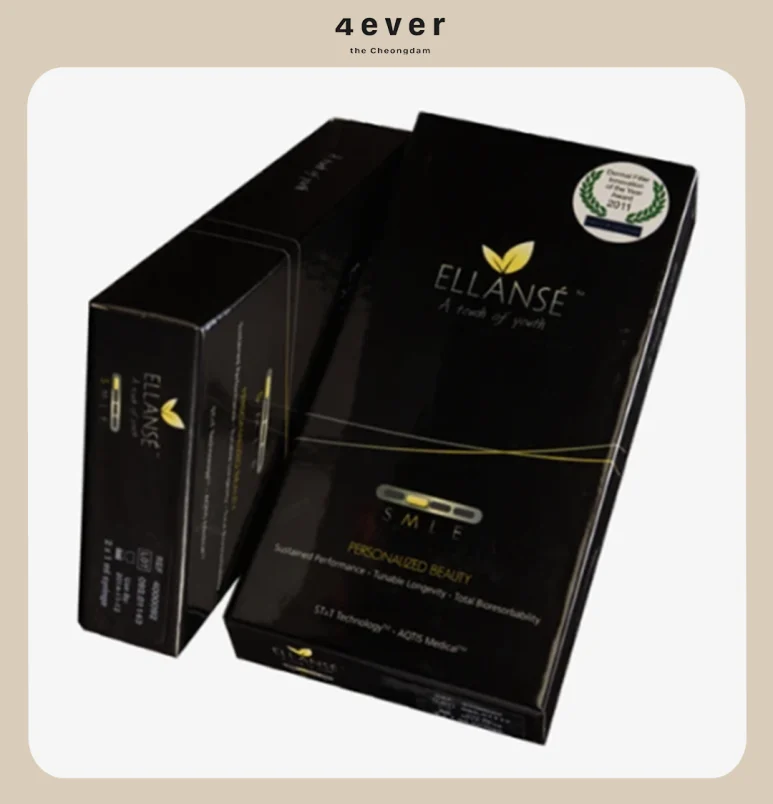
Ellansé, a PCL-based biostimulator, addresses this by restoring volume through the body’s own collagen regeneration rather than adding an external material.
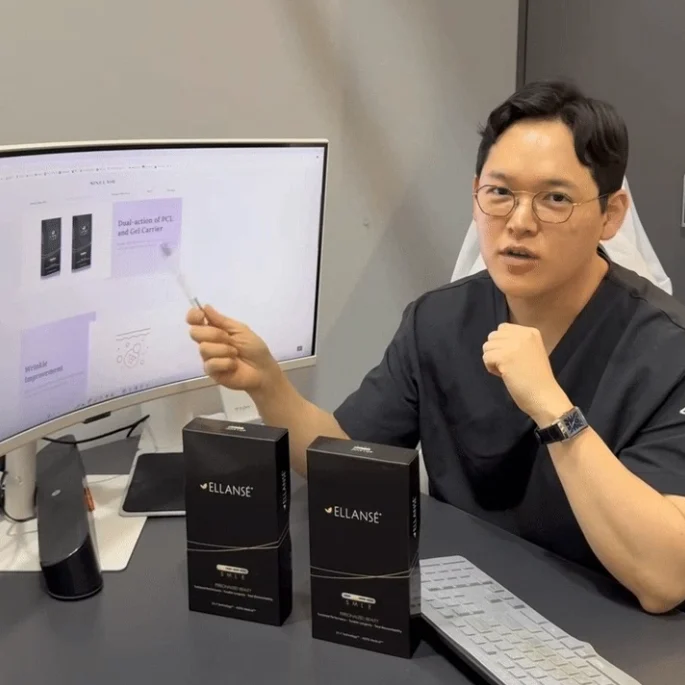
At 4ever Cheongdam Clinic, Dr. Younghan Seo explains what Ellansé is, how it differs from conventional fillers, and what determines whether a treatment delivers lasting results.
Key Takeaways
Ellansé is classified as a biostimulator, not a filler — its active mechanism is PCL-induced collagen regeneration, not volumetric filling.
Unlike HA fillers, Ellansé cannot be dissolved after injection, making dosage control and injection design the primary determinants of outcome.
Current protocol uses small-volume, distributed injection across Natural Lifting and Natural Contouring points rather than localized high-volume placement.
Combining Ellansé with Ulthera or Thermage FLX addresses both structural lifting and volume restoration simultaneously.
Results develop gradually as collagen accumulates, with longevity measured in years rather than months.
Ellansé Is Not a Filler
The most commonly used injectables in Korean dermatology are HA (Hyaluronic Acid) fillers, which add immediate volume by introducing a biocompatible gel into the tissue.
Ellansé operates on a different principle entirely.
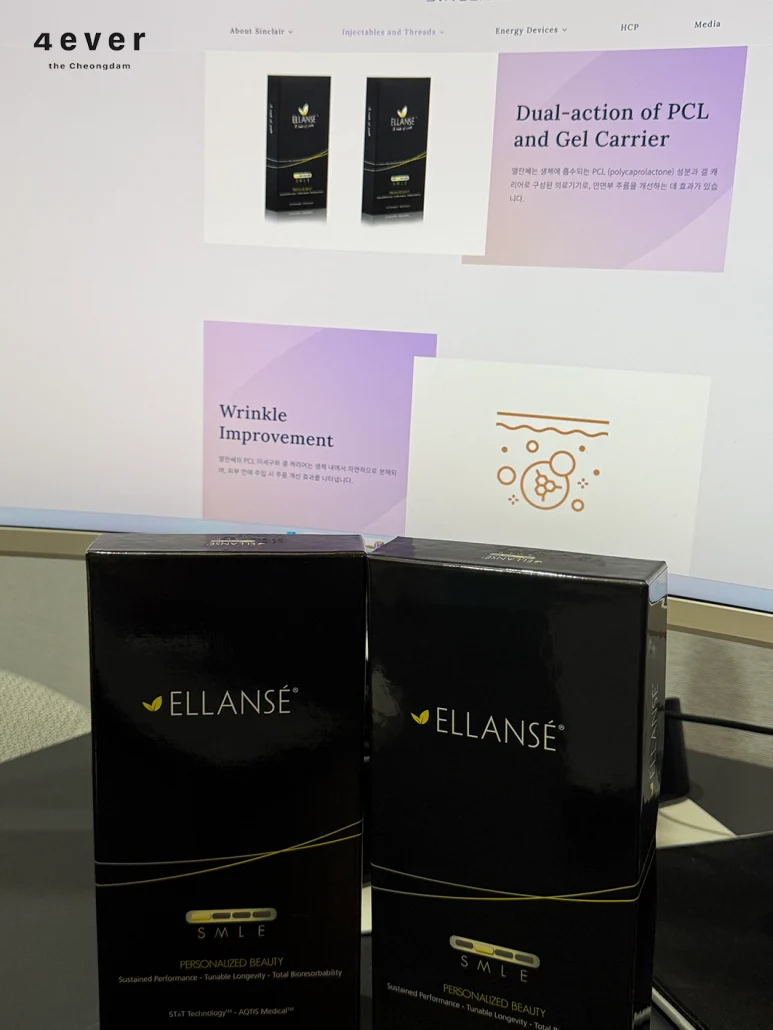
Its active ingredient is PCL (Polycaprolactone), a biodegradable polymer whose microspheres stimulate the surrounding tissue to produce new collagen.
The volumetric effect that follows is not from the injected material itself but from the collagen the body generates in response to it.
This distinction has a practical consequence: HA fillers can be dissolved with hyaluronidase if correction is needed.
PCL cannot. Once injected, it remains in place and continues stimulating collagen production as it gradually resorbs.
The treatment is not reversible in the way HA-based products are, which is why pre-treatment planning carries considerably more weight.
How the Injection Protocol Has Evolved
Earlier Ellansé technique favored concentrated injection into discrete areas, similar to how conventional fillers are placed.
Current best practice has shifted significantly.
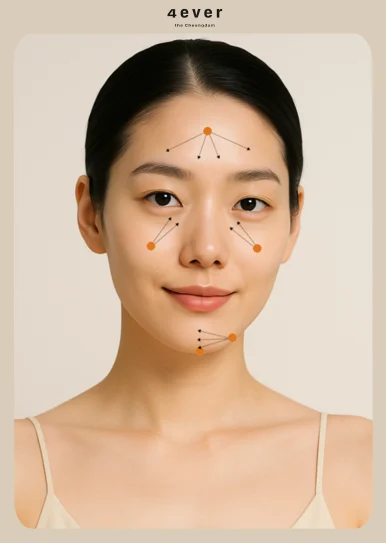
Dr. Seo now distributes Ellansé across two defined reference frameworks:
Natural Lifting Points
Injection sites selected for their structural role in facial support and contour definition — areas where small amounts of collagen stimulation produce the most proportionate improvement in the overall facial silhouette.
Natural Contouring Points
Sites where soft-tissue volume restoration improves three-dimensionality without creating the heaviness associated with high-volume injection.
Using this distributed approach, total volume is typically kept within 2 to 3cc per session.
The result is a gradual, natural-looking improvement in facial structure rather than the filled appearance that high-volume injection can produce.
This calibration also addresses a known risk: because Ellansé stimulates collagen so effectively, over-injection leads to excessive volume and nodule formation.
Clinical guidelines recommend using approximately 50 to 70% of the volume that would be used with a comparable HA filler.
Dosage management is not a conservative preference — it is a clinical requirement.
Combining Ellansé With Energy-Based Devices
Biostimulation and structural lifting address different aspects of facial aging.
Ellansé restores volume and collagen density; it does not directly tighten the SMAS layer or remodel the deeper fascial support structures.
For patients where both volume loss and structural laxity are present, Dr. Seo combines Ellansé with energy-based devices:
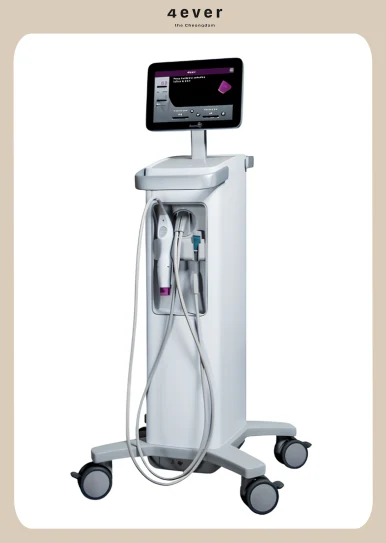
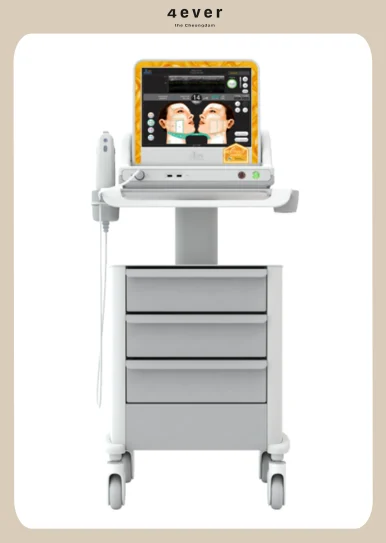
Ulthera
Targets the SMAS layer directly through focused ultrasound, addressing jawline definition and mid-face descent at the structural level.
Thermage FLX
Delivers RF energy across the full dermal depth, improving skin density and elasticity while supporting surface contraction.
Ellansé is introduced following these treatments to reinforce the tenting effect at key anatomical points.
The sequencing matters: energy devices establish the structural framework; Ellansé consolidates and sustains the volumetric result.
Together, they address lifting and volume in a single coordinated protocol rather than treating each concern in isolation.
Why the First Treatment Determines the Long-Term Outcome
Ellansé’s longevity is one of its primary advantages. Depending on the formulation selected, effects persist for one to three years or longer.
That same longevity is also the reason precision at the first treatment is non-negotiable.
Because PCL cannot be dissolved, any asymmetry, excess volume, or suboptimal placement remains until the material fully resorbs.
Correction options are limited. Injection depth, anatomical mapping, and dosage control are decisions that cannot be revised after the fact.
Dr. Seo uses Ellansé both as a standalone treatment and as a finishing step following lifting procedures, applying it at selected points to restore three-dimensionality and enhance elasticity after structural repositioning has been achieved.
In either context, the guiding principle is not volume replacement but structural restoration: designing collagen regeneration that develops naturally over time and integrates with the patient’s existing anatomy.
Frequently Asked Questions
Q. Is Ellansé safe, and what are the most common risks?
A. Ellansé has a well-established safety profile when administered by a trained physician. The primary risks are nodule formation from over-injection and asymmetry from imprecise placement. Because the product is not reversible, both risks are managed through conservative dosing and careful pre-treatment design rather than post-procedure correction.
Q. How long do Ellansé results last, and when does the effect become visible?
A. Longevity depends on the PCL formulation selected: options range from approximately one year to three years or beyond. Initial results are visible immediately from the carrier gel; the collagen-stimulation effect develops gradually over two to four months and continues to improve as the PCL resorbs.
Q. What does an Ellansé treatment at 4ever Cheongdam Clinic typically cost?
A. Pricing depends on treatment area, volume used, and whether combination protocols with Ulthera or Thermage FLX are included. Individualized pricing is provided following a full facial assessment at the initial consultation. Contact the clinic directly for a quote.
Q. Who is a suitable candidate for Ellansé?
A. Patients with early to moderate volume loss in the cheeks, temples, or chin, particularly those seeking a gradual, natural result with extended longevity, are the strongest candidates. Patients who may require adjustment after treatment or who prefer a reversible option are better suited to HA-based fillers.
Q. How does Ellansé differ from Juvelook or other biostimulators?
A. Ellansé delivers immediate volumetric correction from its carrier gel alongside long-term collagen stimulation from PCL — a dual mechanism that Juvelook (PDLLA-based) does not replicate. Juvelook produces gradual collagen accumulation without the immediate structural effect. The choice depends on whether immediate correction or progressive regeneration is the primary treatment objective.
Ready to discuss a treatment plan tailored to your skin?
4ever Cheongdam Clinic offers one-to-one consultations with Dr. Younghan Seo.
Book Your Consultation

Index
Volume loss is one of the most aging changes a face can undergo, and it is also one of the most structurally correctable.
As the cheeks, temples, and chin gradually lose definition, the face shifts from appearing youthful to appearing tired, regardless of skin quality.
Ellansé, a PCL-based biostimulator, addresses this by restoring volume through the body’s own collagen regeneration rather than adding an external material.
At 4ever Cheongdam Clinic, Dr. Younghan Seo explains what Ellansé is, how it differs from conventional fillers, and what determines whether a treatment delivers lasting results.
Key Takeaways
Ellansé is classified as a biostimulator, not a filler — its active mechanism is PCL-induced collagen regeneration, not volumetric filling.
Unlike HA fillers, Ellansé cannot be dissolved after injection, making dosage control and injection design the primary determinants of outcome.
Current protocol uses small-volume, distributed injection across Natural Lifting and Natural Contouring points rather than localized high-volume placement.
Combining Ellansé with Ulthera or Thermage FLX addresses both structural lifting and volume restoration simultaneously.
Results develop gradually as collagen accumulates, with longevity measured in years rather than months.
Ellansé Is Not a Filler
The most commonly used injectables in Korean dermatology are HA (Hyaluronic Acid) fillers, which add immediate volume by introducing a biocompatible gel into the tissue.
Ellansé operates on a different principle entirely.
Its active ingredient is PCL (Polycaprolactone), a biodegradable polymer whose microspheres stimulate the surrounding tissue to produce new collagen.
The volumetric effect that follows is not from the injected material itself but from the collagen the body generates in response to it.
This distinction has a practical consequence: HA fillers can be dissolved with hyaluronidase if correction is needed.
PCL cannot. Once injected, it remains in place and continues stimulating collagen production as it gradually resorbs.
The treatment is not reversible in the way HA-based products are, which is why pre-treatment planning carries considerably more weight.
How the Injection Protocol Has Evolved
Earlier Ellansé technique favored concentrated injection into discrete areas, similar to how conventional fillers are placed.
Current best practice has shifted significantly.
Dr. Seo now distributes Ellansé across two defined reference frameworks:
Natural Lifting Points
Injection sites selected for their structural role in facial support and contour definition — areas where small amounts of collagen stimulation produce the most proportionate improvement in the overall facial silhouette.
Natural Contouring Points
Sites where soft-tissue volume restoration improves three-dimensionality without creating the heaviness associated with high-volume injection.
Using this distributed approach, total volume is typically kept within 2 to 3cc per session.
The result is a gradual, natural-looking improvement in facial structure rather than the filled appearance that high-volume injection can produce.
This calibration also addresses a known risk: because Ellansé stimulates collagen so effectively, over-injection leads to excessive volume and nodule formation.
Clinical guidelines recommend using approximately 50 to 70% of the volume that would be used with a comparable HA filler.
Dosage management is not a conservative preference — it is a clinical requirement.
Combining Ellansé With Energy-Based Devices
Biostimulation and structural lifting address different aspects of facial aging.
Ellansé restores volume and collagen density; it does not directly tighten the SMAS layer or remodel the deeper fascial support structures.
For patients where both volume loss and structural laxity are present, Dr. Seo combines Ellansé with energy-based devices:
Ulthera
Targets the SMAS layer directly through focused ultrasound, addressing jawline definition and mid-face descent at the structural level.
Thermage FLX
Delivers RF energy across the full dermal depth, improving skin density and elasticity while supporting surface contraction.
Ellansé is introduced following these treatments to reinforce the tenting effect at key anatomical points.
The sequencing matters: energy devices establish the structural framework; Ellansé consolidates and sustains the volumetric result.
Together, they address lifting and volume in a single coordinated protocol rather than treating each concern in isolation.
Why the First Treatment Determines the Long-Term Outcome
Ellansé’s longevity is one of its primary advantages. Depending on the formulation selected, effects persist for one to three years or longer.
That same longevity is also the reason precision at the first treatment is non-negotiable.
Because PCL cannot be dissolved, any asymmetry, excess volume, or suboptimal placement remains until the material fully resorbs.
Correction options are limited. Injection depth, anatomical mapping, and dosage control are decisions that cannot be revised after the fact.
Dr. Seo uses Ellansé both as a standalone treatment and as a finishing step following lifting procedures, applying it at selected points to restore three-dimensionality and enhance elasticity after structural repositioning has been achieved.
In either context, the guiding principle is not volume replacement but structural restoration: designing collagen regeneration that develops naturally over time and integrates with the patient’s existing anatomy.
Frequently Asked Questions
Q. Is Ellansé safe, and what are the most common risks?
A. Ellansé has a well-established safety profile when administered by a trained physician. The primary risks are nodule formation from over-injection and asymmetry from imprecise placement. Because the product is not reversible, both risks are managed through conservative dosing and careful pre-treatment design rather than post-procedure correction.
Q. How long do Ellansé results last, and when does the effect become visible?
A. Longevity depends on the PCL formulation selected: options range from approximately one year to three years or beyond. Initial results are visible immediately from the carrier gel; the collagen-stimulation effect develops gradually over two to four months and continues to improve as the PCL resorbs.
Q. What does an Ellansé treatment at 4ever Cheongdam Clinic typically cost?
A. Pricing depends on treatment area, volume used, and whether combination protocols with Ulthera or Thermage FLX are included. Individualized pricing is provided following a full facial assessment at the initial consultation. Contact the clinic directly for a quote.
Q. Who is a suitable candidate for Ellansé?
A. Patients with early to moderate volume loss in the cheeks, temples, or chin, particularly those seeking a gradual, natural result with extended longevity, are the strongest candidates. Patients who may require adjustment after treatment or who prefer a reversible option are better suited to HA-based fillers.
Q. How does Ellansé differ from Juvelook or other biostimulators?
A. Ellansé delivers immediate volumetric correction from its carrier gel alongside long-term collagen stimulation from PCL — a dual mechanism that Juvelook (PDLLA-based) does not replicate. Juvelook produces gradual collagen accumulation without the immediate structural effect. The choice depends on whether immediate correction or progressive regeneration is the primary treatment objective.
Ready to discuss a treatment plan tailored to your skin?
4ever Cheongdam Clinic offers one-to-one consultations with Dr. Younghan Seo.
Book Your Consultation