Index
- Key Takeaways
- Why Inflammation Must Be Addressed Before Regeneration
- What Celexo Is and How It Works
- Why Celexo Is Particularly Effective After Procedures
- Celexo as an Environmental Reset, Not a Filler
- About 4ever Cheongdam Clinic
- Frequently Asked Questions
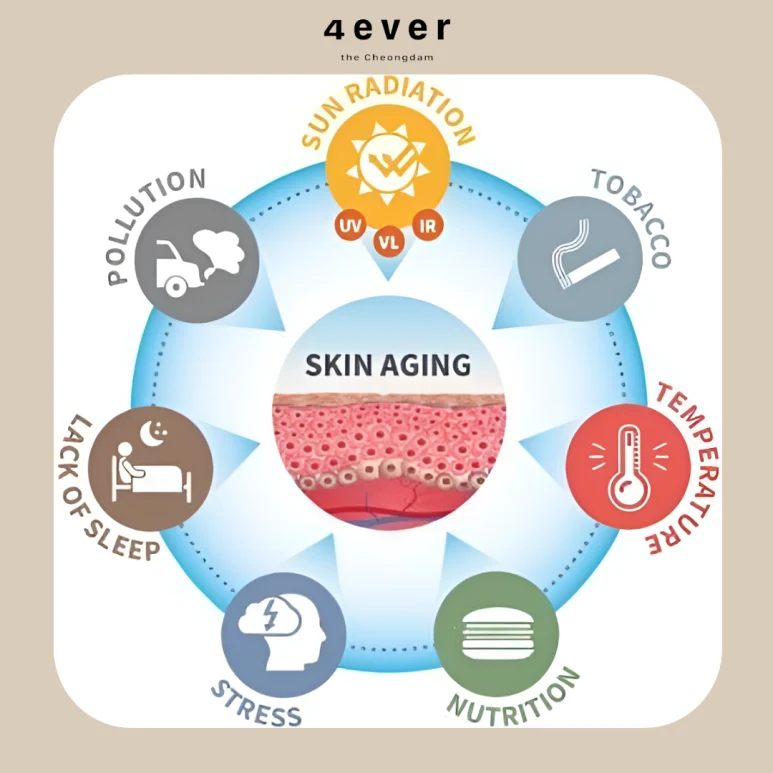
When repeated stimulation from procedures, environmental stress, or aging accumulates in the skin, the result is a state where inflammation outpaces repair.
Regeneration cannot proceed normally under these conditions.
Celexo, a plant-derived exosome treatment, addresses this by targeting the inflammatory environment directly before regeneration is attempted.
At 4ever Cheongdam Clinic, Dr. Younghan Seo explains why anti-inflammatory control is the prerequisite for effective skin recovery.
Key Takeaways
Chronic low-grade inflammation, known as inflammaging, disrupts the skin’s repair cycle and accelerates visible aging.
Celexo is derived from Centella Asiatica and works by suppressing inflammatory signals (IL-6, TNF-α) and reducing oxidative stress.
Unlike volume-based injectables, Celexo modifies the skin environment to support autonomous regeneration rather than adding material.
It is particularly effective as a post-procedure adjunct following laser, lifting, or RF treatments that generate controlled tissue injury.
Celexo has demonstrated utility beyond facial skin, with applications in scalp and hair loss protocols.
Why Inflammation Must Be Addressed Before Regeneration
The skin operates on a continuous cycle of breakdown and repair.
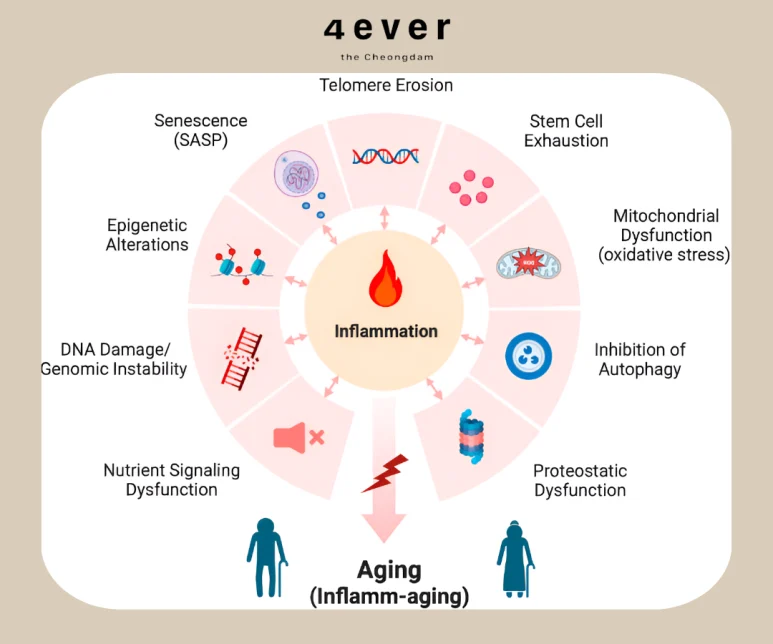
With age, this balance shifts: inflammatory signals activate more readily and resolve more slowly, a condition described in the literature as inflammaging (inflammation + aging).
In this state, the skin accumulates damage faster than it recovers.
Regenerative treatments applied without first stabilizing the inflammatory environment produce inconsistent results — and in reactive skin types, can worsen sensitivity.
Controlling inflammation is not preparatory; it is structural to the recovery process.
What Celexo Is and How It Works
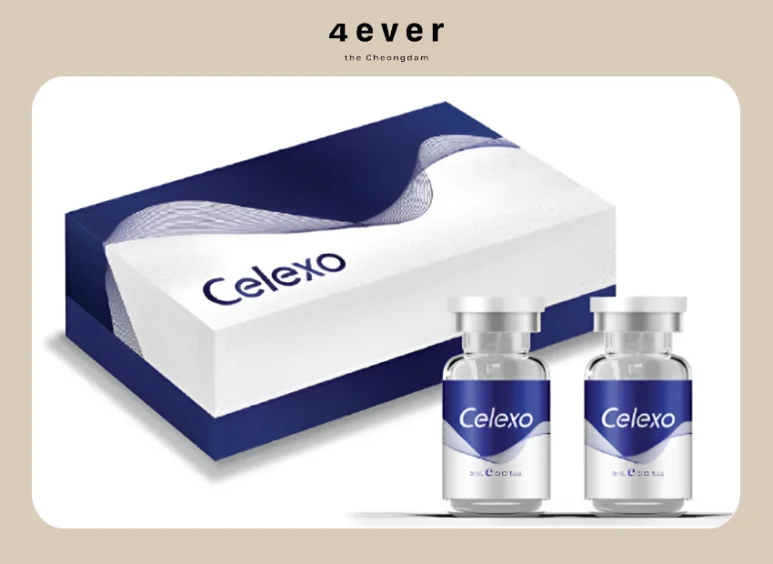
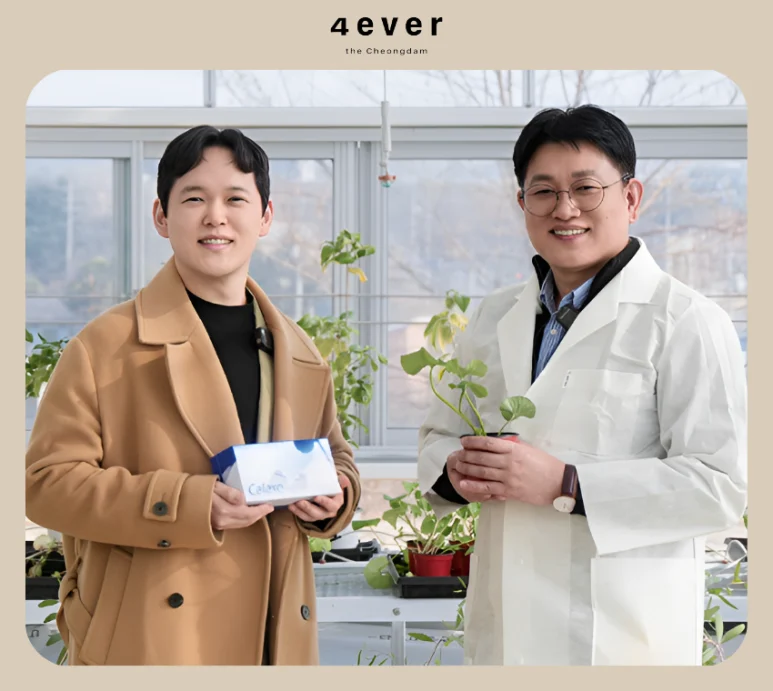
Celexo is a plant-derived exosome product developed from Centella Asiatica by A-BioMaterials.
Exosomes are extracellular vesicles that carry proteins, miRNA, and signaling molecules between cells, functioning as intercellular communication units rather than passive carriers.
Celexo’s mechanism operates through three pathways:
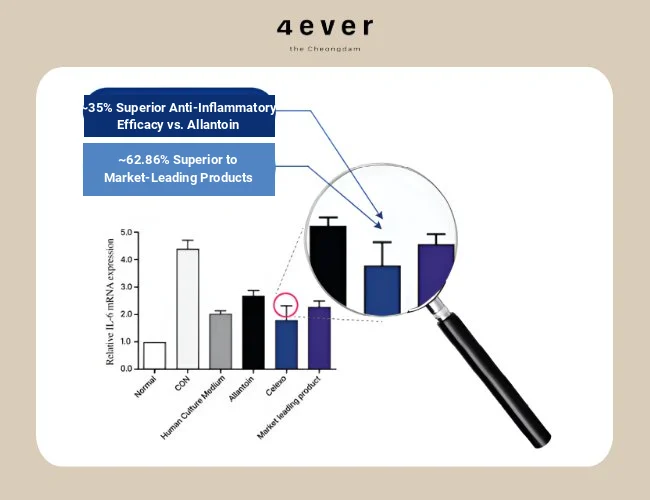
- Suppression of pro-inflammatory cytokines (IL-6, TNF-α)
- Reduction of oxidative stress at the cellular level
- Stabilization of the collagen synthesis environment
The result is a shift in the skin’s baseline state: barrier function improves, reactive responses diminish, and the conditions necessary for sustained collagen production are restored.
Why Celexo Is Particularly Effective After Procedures
Laser treatments, RF microneedling, and lifting procedures all generate controlled tissue injury as part of their mechanism.
This is intentional — but the inflammatory response that follows must resolve cleanly for the regenerative result to materialize.
When post-procedure inflammation is unmanaged, recovery is prolonged and outcomes are inconsistent.
Celexo administered alongside or immediately after these treatments accelerates inflammatory resolution and returns the skin to its repair cycle more reliably.
Dr. Seo presented findings on this application at the Korean Society of Laser Dermatology and Trichology (KALDAT) in December 2025.
Celexo as an Environmental Reset, Not a Filler
The distinction between Celexo and volume-based regenerative treatments is functional.
Fillers and biostimulators add material to the skin.
Celexo changes the conditions under which the skin operates.
The same procedure performed on skin in an inflammatory state versus skin in a stable, receptive state produces measurably different outcomes.
Celexo’s role is to create the latter.
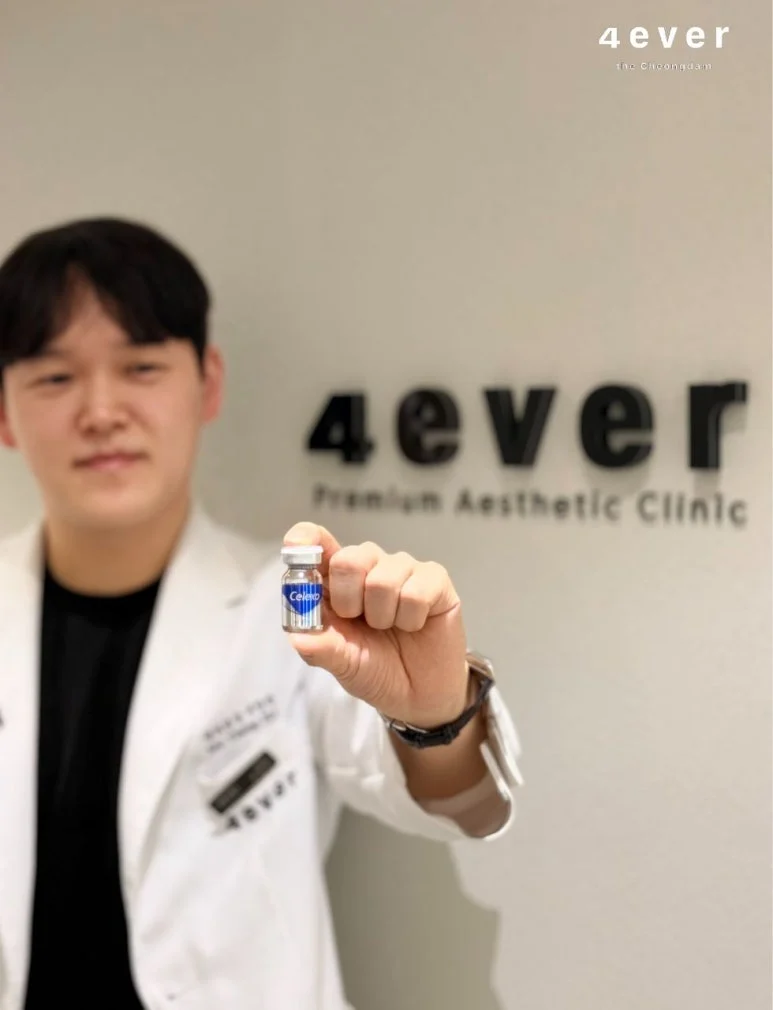
This is why Dr. Seo incorporates it as a standard component of post-procedure protocols at 4ever Cheongdam Clinic rather than treating it as an optional adjunct.
Scalp and Hair Loss Applications
Celexo’s anti-inflammatory profile extends its utility to scalp treatments.
When combined with scalp exosome therapy, botulinum toxin, or stem cell-based protocols, it stabilizes the scalp environment and supports conditions favorable to hair follicle recovery.
Research in this application area is ongoing.
About 4ever Cheongdam Clinic
4ever Cheongdam Clinic is a dermatology practice in Cheongdam-dong, Seoul, South Korea.
Dr. Younghan Seo is one of seven designated research physicians for Celexo and has presented clinical findings at KALDAT and international physician seminars.
He holds KOL designations with six manufacturers across lifting, regeneration, pigmentation, and filler categories.
Consultations assess inflammatory history, skin barrier status, and procedural background before any treatment protocol is finalized.
Frequently Asked Questions
Q. How often should Celexo be administered, and is there any downtime?
A. Celexo is typically administered in a series of three to four sessions, spaced two to four weeks apart, though frequency varies based on skin condition and whether it is being used as a standalone treatment or as a post-procedure adjunct. Downtime is minimal. Mild redness or sensitivity at the application site may occur and generally resolves within 24 hours.
Q. Is Celexo safe for sensitive or reactive skin types?
A. Celexo’s anti-inflammatory and calming profile makes it particularly appropriate for reactive skin types, including those prone to post-procedure redness or prolonged recovery. Being plant-derived, it carries a low adverse-event profile. Patients with active skin infections or certain autoimmune conditions should discuss suitability with their physician prior to treatment.
Q. What does a Celexo treatment at 4ever Cheongdam Clinic typically cost?
A. Pricing depends on whether Celexo is administered as a standalone session or in combination with other procedures, the number of sessions planned, and the treatment area. Individualized pricing is provided following a skin assessment at consultation. Contact the clinic directly for a quote.
Q. Who is the ideal candidate for Celexo?
A. Patients experiencing persistent post-procedure redness, reactive or barrier-compromised skin, or inflammaging-related dullness and sensitivity are well-suited candidates. It is also recommended for patients undergoing repeated laser or RF treatments who want to minimize cumulative inflammatory burden and maintain skin stability between sessions.
Q. How does Celexo differ from other exosome products on the market?
A. Most exosome products in aesthetic medicine are derived from human stem cells or umbilical cord tissue. Celexo is plant-derived from Centella Asiatica, which positions it specifically toward anti-inflammatory and barrier-stabilizing outcomes rather than broad regenerative stimulation. This makes it more targeted for post-procedure recovery and inflammaging management, whereas other exosome products may be better suited to volumetric or structural regeneration goals.
Ready to discuss a treatment plan tailored to your skin?
4ever Cheongdam Clinic offers one-to-one consultations with Dr. Younghan Seo.
Book Your Consultation

Index
When repeated stimulation from procedures, environmental stress, or aging accumulates in the skin, the result is a state where inflammation outpaces repair.
Regeneration cannot proceed normally under these conditions.
Celexo, a plant-derived exosome treatment, addresses this by targeting the inflammatory environment directly before regeneration is attempted.
At 4ever Cheongdam Clinic, Dr. Younghan Seo explains why anti-inflammatory control is the prerequisite for effective skin recovery.
Key Takeaways
Chronic low-grade inflammation, known as inflammaging, disrupts the skin’s repair cycle and accelerates visible aging.
Celexo is derived from Centella Asiatica and works by suppressing inflammatory signals (IL-6, TNF-α) and reducing oxidative stress.
Unlike volume-based injectables, Celexo modifies the skin environment to support autonomous regeneration rather than adding material.
It is particularly effective as a post-procedure adjunct following laser, lifting, or RF treatments that generate controlled tissue injury.
Celexo has demonstrated utility beyond facial skin, with applications in scalp and hair loss protocols.
Why Inflammation Must Be Addressed Before Regeneration
The skin operates on a continuous cycle of breakdown and repair.
With age, this balance shifts: inflammatory signals activate more readily and resolve more slowly, a condition described in the literature as inflammaging (inflammation + aging).
In this state, the skin accumulates damage faster than it recovers.
Regenerative treatments applied without first stabilizing the inflammatory environment produce inconsistent results — and in reactive skin types, can worsen sensitivity.
Controlling inflammation is not preparatory; it is structural to the recovery process.
What Celexo Is and How It Works
Celexo is a plant-derived exosome product developed from Centella Asiatica by A-BioMaterials.
Exosomes are extracellular vesicles that carry proteins, miRNA, and signaling molecules between cells, functioning as intercellular communication units rather than passive carriers.
Celexo’s mechanism operates through three pathways:
The result is a shift in the skin’s baseline state: barrier function improves, reactive responses diminish, and the conditions necessary for sustained collagen production are restored.
Why Celexo Is Particularly Effective After Procedures
Laser treatments, RF microneedling, and lifting procedures all generate controlled tissue injury as part of their mechanism.
This is intentional — but the inflammatory response that follows must resolve cleanly for the regenerative result to materialize.
When post-procedure inflammation is unmanaged, recovery is prolonged and outcomes are inconsistent.
Celexo administered alongside or immediately after these treatments accelerates inflammatory resolution and returns the skin to its repair cycle more reliably.
Dr. Seo presented findings on this application at the Korean Society of Laser Dermatology and Trichology (KALDAT) in December 2025.
Celexo as an Environmental Reset, Not a Filler
The distinction between Celexo and volume-based regenerative treatments is functional.
Fillers and biostimulators add material to the skin.
Celexo changes the conditions under which the skin operates.
The same procedure performed on skin in an inflammatory state versus skin in a stable, receptive state produces measurably different outcomes.
Celexo’s role is to create the latter.
This is why Dr. Seo incorporates it as a standard component of post-procedure protocols at 4ever Cheongdam Clinic rather than treating it as an optional adjunct.
Scalp and Hair Loss Applications
Celexo’s anti-inflammatory profile extends its utility to scalp treatments.
When combined with scalp exosome therapy, botulinum toxin, or stem cell-based protocols, it stabilizes the scalp environment and supports conditions favorable to hair follicle recovery.
Research in this application area is ongoing.
About 4ever Cheongdam Clinic
4ever Cheongdam Clinic is a dermatology practice in Cheongdam-dong, Seoul, South Korea.
Dr. Younghan Seo is one of seven designated research physicians for Celexo and has presented clinical findings at KALDAT and international physician seminars.
He holds KOL designations with six manufacturers across lifting, regeneration, pigmentation, and filler categories.
Consultations assess inflammatory history, skin barrier status, and procedural background before any treatment protocol is finalized.
Frequently Asked Questions
Q. How often should Celexo be administered, and is there any downtime?
A. Celexo is typically administered in a series of three to four sessions, spaced two to four weeks apart, though frequency varies based on skin condition and whether it is being used as a standalone treatment or as a post-procedure adjunct. Downtime is minimal. Mild redness or sensitivity at the application site may occur and generally resolves within 24 hours.
Q. Is Celexo safe for sensitive or reactive skin types?
A. Celexo’s anti-inflammatory and calming profile makes it particularly appropriate for reactive skin types, including those prone to post-procedure redness or prolonged recovery. Being plant-derived, it carries a low adverse-event profile. Patients with active skin infections or certain autoimmune conditions should discuss suitability with their physician prior to treatment.
Q. What does a Celexo treatment at 4ever Cheongdam Clinic typically cost?
A. Pricing depends on whether Celexo is administered as a standalone session or in combination with other procedures, the number of sessions planned, and the treatment area. Individualized pricing is provided following a skin assessment at consultation. Contact the clinic directly for a quote.
Q. Who is the ideal candidate for Celexo?
A. Patients experiencing persistent post-procedure redness, reactive or barrier-compromised skin, or inflammaging-related dullness and sensitivity are well-suited candidates. It is also recommended for patients undergoing repeated laser or RF treatments who want to minimize cumulative inflammatory burden and maintain skin stability between sessions.
Q. How does Celexo differ from other exosome products on the market?
A. Most exosome products in aesthetic medicine are derived from human stem cells or umbilical cord tissue. Celexo is plant-derived from Centella Asiatica, which positions it specifically toward anti-inflammatory and barrier-stabilizing outcomes rather than broad regenerative stimulation. This makes it more targeted for post-procedure recovery and inflammaging management, whereas other exosome products may be better suited to volumetric or structural regeneration goals.
Ready to discuss a treatment plan tailored to your skin?
4ever Cheongdam Clinic offers one-to-one consultations with Dr. Younghan Seo.
Book Your Consultation